





We are strengthening our team with more great colleagues. By the end of the year, we will have over 170 employees.
We are turning the market upside down with another product: the Fit for Future Program. For the first time, an offer specifically supports medical device and IVD manufacturers through their digital transformation. From a five-person company to a corporation with billions in revenue.
At the second World Medical Device Summit, we present the digitalization of regulatory processes. Representatives from politics are enthusiastic and plan to involve us in evaluating the MDR and IVDR.
The Swiss Ministry of Health commissions us to develop a concept to eliminate impending bottlenecks in the supply of medical devices.
AI is finding its way into the daily work of our consultants.
Start of cooperation with WHO
Decision to found a university
Some notified bodies adopt our AI and IT Security Guidelines.
Second Medical Device Days, taking into account all regulations – despite Corona
Establishment of the subsidiary Johner Medical GmbH: Now, we are also a legal manufacturer and authorized representative for medical device manufacturers.
Over 1,500 free consultations were provided via micro-consulting for the first time.
The year begins with a move to Turmstraße 5 in Konstanz. The premises in the technology center were too small. We do not give up our location in Villa Rheinburg, so we are represented at two locations in Konstanz.
Once again, we expand our range of services:
In 2018, our fast-paced development is demonstrated by the following:
We are expanding our seminar offerings:
We are running out of space again in Konstanz. We are renting two offices in the Technology Center.
Auditgarant is expanded to include 50 video training courses to provide support in implementing MDR requirements and IT security.
The team is growing by five more experts, primarily in the areas of clinical evaluation, CSV, and in vitro diagnostics.
The usability labs in Germany and the U.S. are fully booked, and the first projects on IT security for medical devices are getting underway.
The 12th master’s program has begun, sold out as always.
The exponential growth continues:

The video training courses on Auditgarant are now also available in English. We are using our professional video studio at our headquarters, Villa Rheinburg, for this as well. Now we can produce even higher-quality video training courses even faster.
The 11th master’s program in “IT in Healthcare” is, as always, sold out.
Our consulting team is also growing: Luca Salvatore joined us in the middle of the year.
For the first time, we are offering the “Internal Auditor” seminar.
The second MBA program is starting. Once again, the curriculum includes a week in Silicon Valley, featuring stops at elite institutions such as Stanford University and the Kaiser Permanente HMO.
A complete relaunch is planned—not only of the website and the shop system, but also of the entire e-learning platform. The new video training product is now called Auditgarant and helps manufacturers create audit-ready technical documentation for medical devices in the shortest possible time.
Johner Institut GmbH was established on January 1 and brings together the various business divisions of the Institute for IT in Healthcare.
The consulting team continues to grow: Robert Dick-Hambeck and Markus Gerhart have joined the team.
It goes without saying that the ninth MBA program is fully booked again. This time, as early as the end of June. The second MBA program, which begins in 2014, sold out within eight hours.
With 400 attendees, an in-house seminar on medical software development sets a new attendance record.
Our “MedPack” and “RiskPack” software packages are proving so successful that we have decided to spin off this business unit into a separate company, Medsoto GmbH, and hire a developer for it.
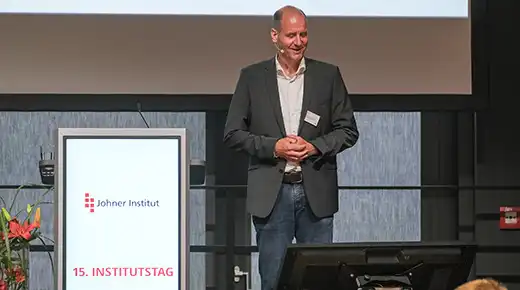
This year’s Institute Day is described by many as the best yet. With 170 registrations, we have reached the capacity limit of our villa.
As every year, a part-time master’s program in “IT in Healthcare” begins in the fall. This is now the eighth one!
We’re kicking off the new year with a first: the inaugural MBA class, with 17 students, is completely sold out. The study week at Stanford is certainly a highlight of this program. Christian Johner’s connections to this elite university are paying off.
With the book “Basiswissen medizinische Software” (Fundamentals of Medical Software), we also lay the groundwork for the “Certified Professional for Medical Software” seminar, for which we become the first training provider to be accredited.
Just as the previous year ended on a high note, the new year begins just as successfully. In the national competition “Germany – Land of Ideas,” the institute is once again honored as an “excellent site,” following its recognition in 2007. This time, the award is for its “Healthcare IT for Africa” initiative.
Demand for consulting services is also so high that further expansion is both necessary and possible with the addition of ISO 13485 Lead Auditor Alexander Thern.
The fifth master’s program is the first to begin at the new Constance location in Villa Rheinburg. With the addition of Sven Wittorf and Corinna Hartmann, the team continues to grow in order to meet the high demand for program spots and consulting services.
The Institute Club is established, and several companies immediately begin using it to provide structured training for their employees. To distribute the approximately 25 web-based training courses created this year, the audit guide developed at the end of the year, and the practical handbook “IT in Healthcare” published by Hanser Verlag in 2009, the Institute Shop is launched. Thus, 2009 becomes the Institute’s most successful year to date.
Almost all hospital chains, as well as major manufacturers and providers of IT and healthcare products and services, are now our clients.
The product portfolio has expanded significantly to include webinars and seminars. As club members, clients enjoy numerous benefits.
As always, the fourth master’s program is already sold out.
In the “Germany – Land of Ideas” competition, the institute is honored as a “Landmark of Excellence.” The grand ceremony becomes a gathering place for the industry.
The Medical Association recognizes the master's program for the additional qualification in “Medical Informatics.”
The third cohort begins in September—already fully enrolled months in advance.
The second course also sells out quickly. The list of companies represented by the participants includes most of the major providers. The list of speakers reads like a who’s who of IT in the healthcare sector.

Leading experts in the fields of IT management, law, communication, business administration, health economics, IT systems development and operations, and medical statistics have been recruited.
Among them are the head of the Healthcare Management Institute at the University of Trier, Prof. Dr. Goldschmidt; the director of the Institute of Business Administration at the University of St. Gallen, Prof. Dr. Rüegg-Stürm; the senior official at the Federal Ministry of Health, Dr. Dietzel; and Walter Bachmann, a lawyer specializing in IT law at the law firm Graf von Westphalen, Bappert, and Modest.
The program launched to a full enrollment in September 2005. Enthusiastic students gave the instructors in the first few weeks a perfect grade of 1.1.
As part of the “Pharma and Biotech Management” master’s program at Danube University Krems, it becomes clear how many IT projects—even in the healthcare sector—fail to achieve the desired success.
The idea was born to establish a specialized university program in which experts would work alongside students to develop strategies for efficiently designing and operating IT systems and applying them to improve effectiveness in the healthcare sector.
The curriculum is developed, and the newly founded institute is launched under the name “Calcucare Institute” as a division of Calcucare GmbH (now NephroCare), a subsidiary of Fresenius Medical Care.

We use cookies on our websites. Some of them are essential, while others help us to improve this website and your experience.


